Showing posts with label judiciary. Show all posts

Wednesday, January 30, 2013

Telangana turmoil: Toying with the judiciary


Lack of faith in elected representatives and administrative machinery has seen people increasingly turning to judiciary to get things done. Well... faith in judiciary is good, but it doesn’t mean its understaffed machinery should be dragged into all matters — the latest row over Telangana statehood being the best example.
A Hyderabad court has directed the police to file a case against Union ministers P Chidambaram and Sushilkumar Shinde for making crucial announcements regarding the formation of Telangana, and subsequently failing to keep them.
The petitioner had moved the court saying the ministers should be booked under Section 420 of the Indian Penal Code (IPC) for “cheating”. Now let us see what the law says.
Whoever cheats and thereby dishonestly induces the person deceived to deliver any property to any person, or to make, alter or destroy the whole or any part of a valuable security, or anything which is signed or sealed, and which is capable of being converted into a valuable security, shall be punished with imprisonment of either description for a term which may extend to seven years, and shall also be liable to fine.
Hello, where does this apply in the context of Telangana?
While one can understand the emotion behind the petition, the rationality of admitting a political policy decision should be considered more carefully. If politicians, whether holding public office or not, are to be booked and punished for not keeping their promises, there would hardly be anyone who can stay out of jail.
Considering the amount of lofty promises that politicians make regarding bringing development, introducing welfare measures, providing good governance and weeding out corruption (ROFL here..), cases against political class alone will be sufficient enough to create a separate wing of judiciary.
Crores of cases are pending in our courts – some of them dragging on for decades. Tens of thousands are languishing in overcrowded jails awaiting trial. Scores of them have spent more time behind bars than what the maximum punishment for their crime would have been.
Despite the crushing workload, curiously, there is always time for trivial cases like complaints against random movie stars for ‘indecent’ performances at stage shows, ‘obscene’ posters and ‘objectionable’ opinions.
One can’t help but wonder if the legal luminaries who drafted our laws did not have the foresight to include separate laws to protect the moral fabric of the society. May be, in the ongoing process of legal reforms, we should introduce laws on soul too!
A wise man once said “there is nothing permanent except change”. In realpolitik, policies and decisions keep changing to adapt with changing circumstances. This evolution is inevitable in the course of decision-making and progress.
If change of stance is a criminal offence, there would be no scope for the politics of alliances in India. When a party switches its support, it is never done with the approval of every single member and those who voted for it — therefore it would amount to fraud.
The legal system is in place to address grievances and provide justice. When it is abused for publicity and other vested interests, it is this original purpose which is being defeated. And we don’t need that... Do we?

(This article was published as the editorial column in Postnoon on January 30, 2013.)

Wednesday, December 26, 2012

When state fails, vigilante rises


"Law and order exists for the purpose of establishing justice and when they fail in this purpose they become the dangerously structured dams that block the flow of social progress."
Martin Luther King 
Much has been the public outrage across the country in general, and the national capital in particular, after the Delhi bus rape incident. The focus has mostly been on safety of women and the flaws in the system that is supposed to protect them.
However, little has been said about the rising danger of vigilante justice — which will find many takers as the ‘system’ continues to fail them.
One such example is an incident that took place in Jharkhand recently when a village meticulously planned and executed the lynching of five men who were constantly molesting women in the locality. After the murders, a mob went to the local police station to take responsibility. 
While this can be considered as an isolated incident, one cannot ignore the rising public discontent when the justice delivery system fails their expectations.
There are tens of thousands of cases every year when people are forced to suffer heavy-handed measures of the state that is supposed to protect them from oppressors. Many ‘development’ projects that are launched with fanfare involve land acquisitions and rarely is this done ensuring adequate compensation to the landowners.
Since many contracts are ‘won’ by benamis of politicians, their methods of coaxing the landowners through threat of violence and, of course, real violence, are invisible to the guardians of law. Considering  there is little difference between the treatment meted out to them by the goons and the police, it is only natural that organisations such as the Maoists are never short of fresh blood.
While the salaried class is squeezed dry through every possible tax and surcharges, the corrupt officials and politicians are having a field day. The rags-to-riches success story of the Indian political class who turn rupee billionaires after spending barely a decade in modestly-paid public offices should put financial moghuls to shame.
The Central government cites constraints of international agreements and refuses to divulge the names of those who have bled the country white and stashed their illicit wealth abroad.
So, while a clerk caught taking a Rs 500-bribe loses his job and spends time in jail, those who siphoned off enough money to feed an entire generation continue to rub shoulders with national leaders and star as outspoken stalwarts of industry.
Even in cases communal violence, response of the state machinery has always been late and on many occasions — complicit. The best example would be 2002 Gujarat riots. While small-fry and thugs have been convicted, the masterminds of the mass murders — executed with meticulous planning and clinical precision — remain untouched. When caste kangaroo courts make a mockery of judiciary and police and continue their reign of unfettered bloodshed, the victims have nowhere to run.
With all institutional mechanism failing to provide justice or protect from injustice and oppression, majority of our population (without the ‘protection’ of a politician or a criminal – now don’t ask me what’s the difference) has been rendered helpless, hopeless, powerless and cornered.
Great minds have made observations such ‘man is a political animal’ and ‘man is a social animal’ — basically an animal with many intellectual facets. And guess what happens when an animal is cornered without any possibility of escape...

(This article was published as the editorial column in Postnoon on December 26, 2012.)

Wednesday, December 19, 2012

We have built a rapist’s paradise


A journalist friend’s social network post on the Delhi bus rape made some scathing observations, and correctly so, about how the nation is truly ‘outraged’ only when sexual violence occurs in the heart of political and economic powerhouses. 
Society and what we call “the system” are equally responsible for the state of sexual siege the women of this country are forced to live under.
Newspapers come up with illustrations of statistics and news channels line up ‘experts’ from different walks of life to hold prime time panel discussions on the deteriorating social conditions.
There is a lot of drama and rage before cameras and mikes for a few days, then all is gradually forgotten — till another mauled female form is discovered abandoned and battling for life.
Though psychologists may line up a host of reasons to explain the behaviour of perpetrators of sexual violence, it boils down to few basic reasons.
  • Societal endorsement of masculine aggression
  • Lack of airtight case-building that will lead to conviction
  • Flawed portrayal of women in popular culture
  • Outdated patriarchal social system that tends to punish the victim than the violator
  • An ultra-slow legal system that can be exploited to delay justice to the effect of denying it

As long as we have ludicrous ‘out-of-court settlements’ for rape such as rapist agreeing to marry the victim, the justice system is taking a beating. This is an endorsement that the rape victim is in some way ‘contaminated’ and ‘unfit’ for leading a normal life. 
It also puts the victim at the mercy of the violator, who has already destroyed every minute element of self-respect she possessed. Every act of sexual intercourse after such a wedding is nothing short of socially-endorsed rape.
The absence of quick legal redress ensures that the victim is forced to put up with inordinate delays as case hearings are postponed and mental wounds stay raw and open. And thanks to the media attention (which usually goes overboard), every last bit of privacy of the victim goes for a toss — making a return to normal life even more difficult.
From policemen, politicians and social workers, we need to go miles in terms of treating cases of sexual violence with sensitivity. There is no dearth of top cops and politicians who shift the blame on victims’ tight clothes and loose morals.
Above all, the lack of a punishment that serves as a deterrent to rapists is the biggest inducement for the perpetrators to continue their brutal hobby with impunity. I reiterate my call, from an earlier column, for surgical castration of rapists. 
If there is anything that can deter the rapist, it is the permanent destruction of the supply chain that powers the macabre hunt.
I know this is not a permanent solution. However, with predators reduced to paper tigers, forced to live in self-loathing for the rest of their lives, the world becomes a better place for the fairer sex.

(This article was published as the editorial column in Postnoon on December 19, 2012.)


Wednesday, October 10, 2012

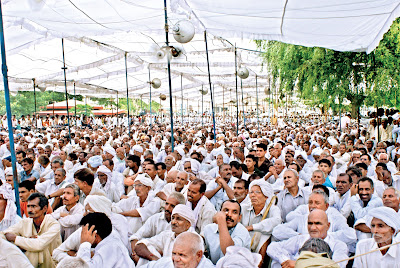
Khaps are our Taliban, crush them before it is too late


After decades of deafening silence or being hand-in-glove with caste councils (khaps), the politicos seem to muster courage to speak out against these kangaroo courts, if Congress president Sonia Gandhi’s forays can be considered as an indicator.
Political parties have banked on caste votes to fuel their journeys to power and therefore it is natural that they don’t tread on the turf of their benefactors. This is not purely an India-exclusive phenomenon. At the zenith of Nazi power, the Catholic Church maintained silence on German atrocities in return for sparing the interests of the Church. Spain’s brutal dictator Franco too enjoyed similar privileges.
Haryana is not the nucleus of the menace of khaps — its tentacles reach the nook and corner of the country. Even while public outrage against khap-ordered atrocities, especially against women, are on the rise, political leaders are very measured in their response — Sonia too is no exception to this unspoken rule. Though she condemned the rise in crimes against women and called for the severest punishment for rapists, her response to a question regarding the ‘authority’ of khaps was surprisingly mild. She said only the government and courts have the authority to prosecute people. The statesman-like statement did not directly attack khaps nor did it say the kangaroo courts need to be done away with.
Khaps are nothing but an Indian version of Taliban, which has been instrumental in crushing the lives of millions of women in Pakistan and Afghanistan. The colour of the flags may differ, but the obsolete and suppressive ideologies are same.
The khap advisory to get girls married off at the age of 16 to curb rapes is not much different from the logic of proponents of female genital mutilation that physically and mentally scars millions of women across the world.
The primitive justification of male superiority and importance has over the decades created a demographic disaster across the country with plummeting sex ratios. The result has been an overdose of testosterone in social life. Coupled with the tradition of glorifying suppression of women’s rights, an environment dangerous for the fairer sex has been created.
Though our politicians take umbrage at comments on a wide range of matters and their wisdom spans from personal etiquette to art, philosophy, and literature, no one has the courage to take on the scourge of these extra-constitutional cancers that have been gnawing away at the core of ideals of democracy and liberty — ironically, guaranteed by the Constitution and reinforced by court rulings.
Mahatma Gandhi once said that India lives in its villages. And if the women in our villages are forced to live under the reign of khap terror, what kind of rule of law can we boast of?
Unlike the urban folk, the rural heartland turns out to vote in large numbers. When they exercise their electoral franchise, they hope their representatives will create a better future for them. However, our democratic model has remained a pathetic failure in this department.
When a country cannot protect its women (No, locking them inside houses and teen weddings are NOT solutions); when it cannot ensure freedom of choosing life partners for its youths; when law and order machinery fails to do its duty, we are no different from the failed states that are our neighbours.


(This article was published as the editorial column in Postnoon on October 10, 2012)

Wednesday, August 15, 2012

India’s independent, but Bharat’s still a mess


The woods are lovely, dark, and deep,
But I have promises to keep,
And miles to go before I sleep,
And miles to go before I sleep.

— Robert Frost

Another Inde­pendence Day has come, actually the 65th one, and as usual the nation has been served its regular dose of an inspiring speech by its prime minister. However, the questions remain about what it has done for the countrymen.
At least Manmohan Singh has shown enough sense in not bragging about 'India Shining' like his NDA predecessors and has been realistic in saying that true independence will come only when we “banish poverty, illiteracy, hunger and backwardness”.
I wouldn't show the audacity to advise the economist on how to steer the economy through these turbulent times of Eurozone crisis, but I definitely know his team should do more to keep my food and fuel bills down.
True that poor monsoons have played truant so far and it will impact the food stocks. But that doesn't justify close to 40 per cent of foodgrains rotting away due to lack of storage infrastructure. Unless this massive hole is plugged, the effect of all subsidies and special packages will be negated.
While rapid economic growth is being encouraged, little is being done to check the irreversible damage it is doing to the ecology and the people. Special Economic Zones on farmland; hydel projects drowning swathes of forest; toxic emissions that pollute and the millions who are displaced, deprived of dignity and condemned to lives of penury. Those who champion people's causes and come to power turn even worse oppressors and exploiters.
Corruption is endemic. Central ministers to office attendants in villages; Generals to traffic cops; judiciary, bureaucrats, doctors and scientists... there is no end to the list. And, of course, the 'enterprising' politicians who turn multi-billionaires in few years by 'serving the people'. Anti-corruption crusaders have fallen to the lure of political power and a 'guru' with dubious credentials is hogging the limelight.
Society is in tatters. Caste system continues to condemn hundreds of millions to sub-human conditions. Caste kangaroo courts run their writ of murders, gangrapes and ostracism campaigns, and the official machinery only pays lip service to protection of human rights. Reservations that were instituted to promote integration have turned into a major divisive factor. Sex crimes against women and minors are skyrocketing while thousands of female foetuses are killed through selective abortion. Manual scavenging continues and a majority of villages still don't have toilets. Unless these fundamental issues are resolved, whatever progress we claim to make will remain tall claims.
The GDP share for healthcare remains dismal and social security a distant dream. Dozens of key legislations including Women's Reservation Bill, Lokpal Bill and Whistleblowers Bill have not been passed as politicians continue to squabble and waste the time of Parliament.
Security remains a major concern. A substantial part of the country is literally under Maoist control and separatist insurgencies continue to take toll on lives in several states. The latest spell of violence in Assam shows fundamental flaws are yet to be rectified. Terrorist attacks continue across the country even as plan after plan and agency after agency are announced to tackle the menace.
All we ask of the leaders of this country is to show some real commitment to the original purpose for which the people put their faith in them and the institution of democracy.
(This article was published as the editorial column in Postnoon on August 15, 2012)

Wednesday, June 20, 2012

Let’s pitch in to keep the City of Pearls shining

The saying ‘All good things must come to an end’ appears to be proving true in the case of Hyderabad. The capital of a resource-rich state has become the hub for the dark side of human nature.
The economy is in doldrums; the government in paralysis; and the judiciary — the last hope for the public — has fallen prey to corruption: dark clouds of despair cover our skies.
The latest wave of Telangana agitation — that began in 2009 yet inconclusive in realising its objective — has resulted in scaring away investors from the state. The beating that the infrastructure took and the crores spent in maintaining law and order have added to the State’s woes.
Last year’s 45-day general strike (Sakala Janula Samme) caused losses of thousands of crores, disrupted academic calendar and dampened the spirit of the people. Maintenance of infrastructure is not rocket science but basic planning with common sense.
Considering the chaos the City is going through since the start of the monsoons, one realises little headway has been made there. While civic agencies contend all is well, water-logged roads and traffic gridlocks that last for hours tell a different story.
Under attack on different fronts, the Kiran Kumar Reddy government has been spending all its energy on the bypolls to demonstrate to the powers that be in Delhi that the CM is on top of the affairs of the state. He definitely is on top, but has little ground under his feet. If there is anything that is in plenty in the State it is scams.
There is not a single sphere of administration that is free from corruption at the highest levels and in massive scale. The recent multi-crore cash-for-bail incident has thrown light on how legal ‘technicalities’ emerge that allow the rich and connected to stay out of jail.
The otherwise lengthy court proceedings, that condemn people as under-trials for periods several times the maximum possible sentence, are tweaked to suit the convenience of these VIPs.
Not only is our tax money looted, but we end up financing financing the looters’ ‘special class’ facilities in jail also! With a minister in jail and several others on the verge of joining him, one can’t help but remember a headline this paper carried a few months back — ‘Next Cabinet meeting in Chanchalguda’.
The agency that ensures the safety of lives and property of the public, the police, is in total disarray. With the DGP’s appointment set aside by the Central Administrative Tribunal and another top official on the run, the idea of going to the cops sounds like a joke.
However, one can’t blame all the woes of Hyderabad on men in khadar, khaki, and black and white. The blatant violation of every rule, disregard for fellow denizens that one sees in every sphere of life is the cement that holds the bricks laid by the big boys.
When caste and community loyalties, and irrational sentiments handout massive victories to parties that are neck-deep in corruption and disruptive activities, one can’t just blame the system. We are responsible in creating the monsters that exploit, humiliate and terrorise us. The first step to solving a problem is admitting that one exists.
Whether it is for a day or a five-year term, the government must carry out its primary duty — governance. The CM must quell crippling dissidence and take his colleagues on board to ensure that the numerous welfare schemes reach the beneficiaries.
The State capital, which is set to hold an international conclave on biodiversity in a few months, is in need of a facelift. The work of civic agencies should be coordinated better to avoid hassles to public and wastage of money. The denizens too should pitch in by following rules and procedures so that the City of Pearls doesn’t lose its sheen.
(This article was published as the editorial column in Postnoon on June 20, 2012)